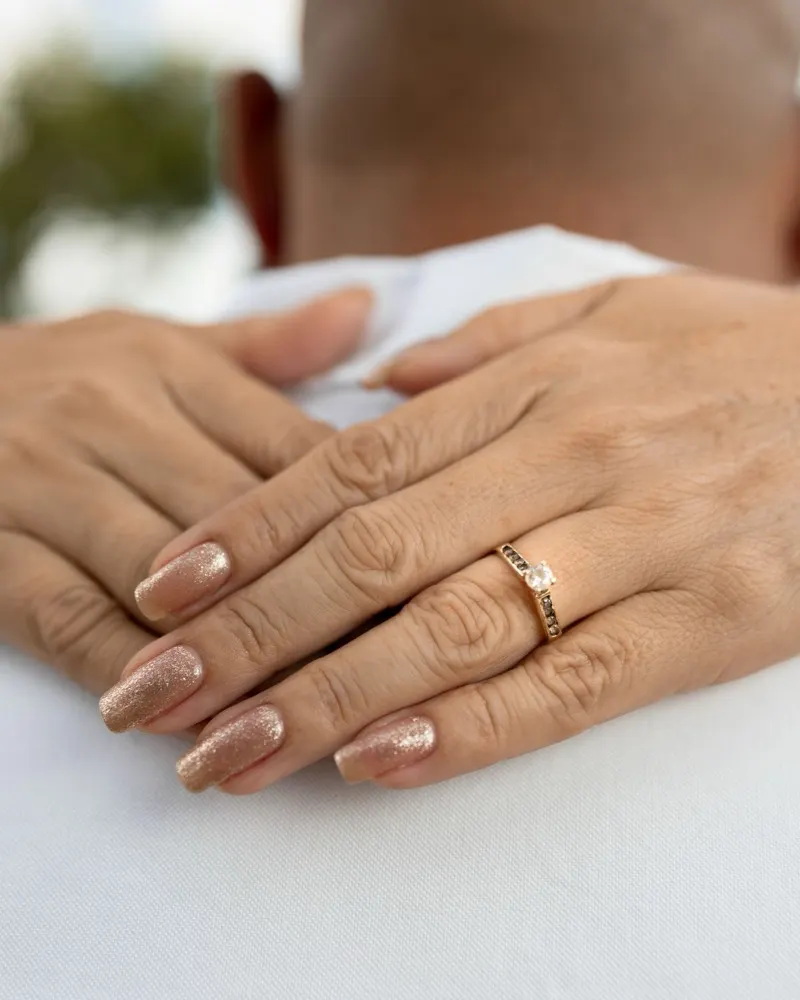
Choose a starting point
Put on the ring you want to begin with and look at its outline. Is the shape round or angular? Is the band narrow or wide? Decide whether you want another piece to echo one of those details or introduce something different.
Try a pair before adding a third. Take a moment to look at the whole hand, including the space between fingers, rather than focusing only on the rings.
Change one thing at a time
Experiment with one contrast: a different width, a new outline or another metal color. Repeating one detail can give the combination a connection while the other shapes stay distinct.
You can also spread the pieces across two hands. Leave a finger bare, move a favorite across or return to a single ring. The arrangement can change with what you want to wear that day.
Check the fit of the combination
Try moving your fingers naturally. Do the rings feel comfortable together? Are the settings catching? If anything pinches, catches or feels forced, take the combination off and ask a jeweler about fit and suitability.
Before buying a ring to sit beside an existing one, ask about both pieces’ dimensions and settings. A styling photograph does not establish that two particular rings can be worn together safely. Have the actual pairing assessed if you are unsure.
Keep the version you enjoy
Once you find a comfortable arrangement you like, take a photo for yourself. It can be a reference when you dress or compare a future addition, rather than a shopping list to complete.
If you have a specific idea for a companion piece, describe the existing ring and what you would like to change in a custom-design inquiry. Any fit, design or production details will need confirmation.